
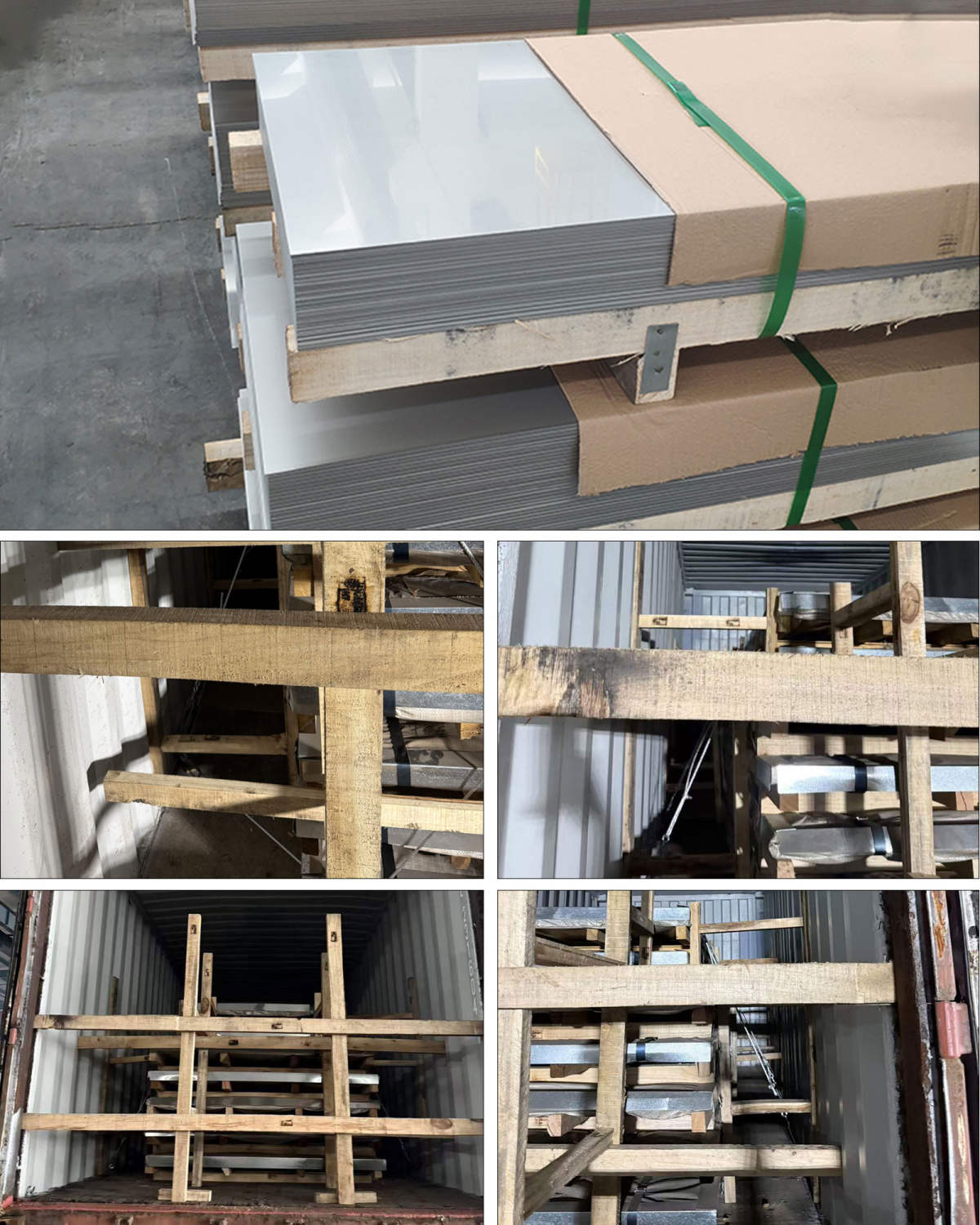
As global supply chains continue to demand rigorous safety standards for heavy industrial freight, logistics operators are relying on highly engineered, traditional packaging methods to secure high-value materials for overseas transit. Currently, a major shipment of 304 stainless steel plates is being finalized at a logistics hub, utilizing a massive, custom-built timber framework to secure the dense cargo inside standard shipping containers.
The shipment consists of numerous bundles of 304 stainless steel plates, a material renowned for both its industrial utility and its extreme density. Because the total weight of the cargo pushes the limits of a standard 20-foot container's payload capacity, the primary challenge for the loading crew is not just physical lifting, but absolute load stabilization.
Stainless steel plates, particularly 304 grade, are heavy, have a low-friction surface, and are highly susceptible to surface damage and edge bending if allowed to shift. To counter this, standard palletization is insufficient. The loading process requires the construction of a rigid internal exoskeleton made of rough-hewn timber.
Inside the corrugated steel walls, thick vertical and horizontal wooden beams are tightly wedged to create a structural grid. This heavy timber "dunnage" prevents lateral movement by acting as a physical barrier against the container walls. It is carefully positioned to absorb the immense kinetic energy generated by the shifting weight of the steel during ocean swells.
The timber structure alone is not enough. Intertwined through this wooden grid is a network of high-tensile steel strapping and wire ropes. These cables anchor the heavy steel bundles directly to the container's floor rings. The combination of compressive wooden support and tensile steel cabling creates a highly secure, dual-layered lockdown system. Every stack of plates is separated by wooden spacers and bound tightly, ensuring the load acts as a single, immovable mass.
While automated warehousing and standardized plastic pallets dominate the shipping of consumer goods, the export of heavy raw materials still depends on this labor-intensive, engineering-driven approach. Once sealed and transported to the port, this temporary wooden fortress will be solely responsible for protecting the cargo through weeks of maritime transit, crane handling, and rough weather.
This meticulous method of securing 304 stainless steel highlights the unglamorous but critical groundwork that ensures heavy industrial materials arrive at overseas markets intact and safely.
Feel free to contact us


You can consult us at any time if you have any questions. You can email or call us at any time, and we will reply to you as soon as we receive your information.